
Maharat Fekria — Elevating Your Success

About us

We build the capability before we build the programme

A specialist practice that works with institutions to turn training from a detached activity into a connected system — beginning with needs analysis and ending with measured impact.

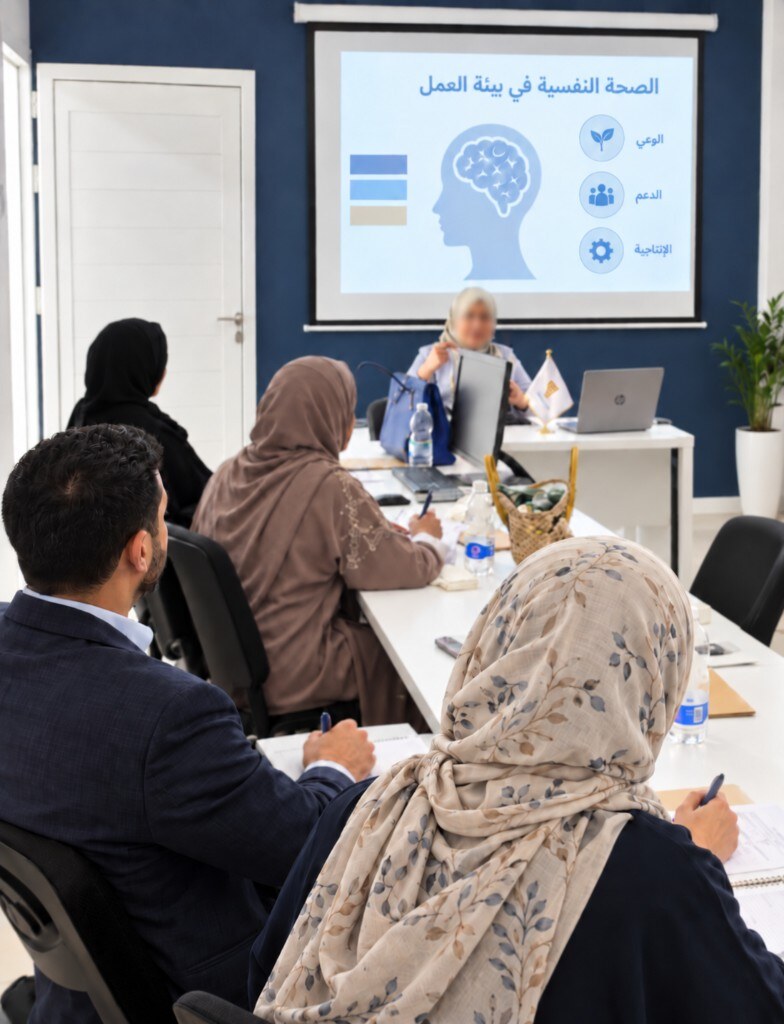
The Maharat Fekria team in an institutional working session

Introduction

A practice built around human capital

Maharat Fekria Company for Training and Human Resources Development is a specialist practice working with public and private organisations to design and deliver training and development interventions.

We do not treat training as an event to be completed, but as an investment to be measured. Every project therefore begins with a question about the gap to be closed, and ends with a report setting out what actually changed.

Establishment

It began with a conviction

The company was established in 2024, from the conviction that institutions do not advance through structures alone, but through their teams' capacity to learn, adapt and deliver.

From the first day we chose to work to an explicit methodology rather than rely on off-the-shelf material, and to be candid with clients about what training can achieve and what it cannot.

The record of institutional projects and milestones is being documented and is not published here before it is confirmed.

Our vision
To be the company's first choice for advanced training solutions, leading knowledge-driven change in specialised work environments — particularly oil and gas.
Our mission
To enable institutions to build their teams' capability through training and development solutions designed to their actual need and delivered to disciplined professional standards.

Our values

Five values that govern how we work

  • Transparency

    We deal openly at every stage of the work, and present results as they are.

  • Professionalism

    We hold to professional working standards in planning, delivery and follow-up.

  • Commitment

    We deliver on the timeline and outputs we agree to.

  • Quality

    We review every output before delivery to confirm it meets the agreed standard.

  • Innovation

    We continuously develop how we work to keep pace with the needs of the sectors we serve.

Our institutional approach

How we run a training project

Four stages govern the client relationship, with a documented output at every handover.

  1. Listen

    A diagnostic session with decision-makers to understand the organisational context and the gap to be closed.

  2. Design

    A proposal setting out behavioural objectives, the learning map, and the measurement methods.

  3. Deliver

    Running the programme in a prepared environment, pacing it to the participants' actual level.

  4. Measure

    A report covering reaction, learning and impact, with recommendations for the next improvement cycle.

Why Maharat Fekria

The difference is not the room — it is what happens before and after it

Most training fails because it starts from content. We start from a question: which gap are we closing, and how will we know we closed it?

  • We start with analysis

    No programme is proposed before the gap between current and required performance is understood and documented with the client.

  • Bespoke design

    Content, examples and exercises are drawn from your working environment, so learning transfers into practice without translation.

  • An internationally adopted methodology

    We hold to the ADDIE model on every project, which keeps the path disciplined and every stage's outputs explicit.

  • Impact measurement

    Evaluation is part of the design from the outset, and the final report presents results as they are, without embellishment.

  • A practitioner team

    Trainers and consultants who combine academic grounding with field experience across the public and private sectors.

  • Professional commitment

    A clear timeline, documented communication, and delivery to the specification agreed in the contract.

How we work

The ADDIE model for training design

An internationally adopted instructional design methodology whose five phases — analysis, design, development, implementation and evaluation — we follow on every training project.

Each phase is delivered with a documented output, signed off by the client before the next begins.

Let's begin

Tell us about the challenge your teams are facing

Write to us in a few lines and we will come back with an initial proposal setting out the suggested path and the outputs of each stage.

WhatsApp